

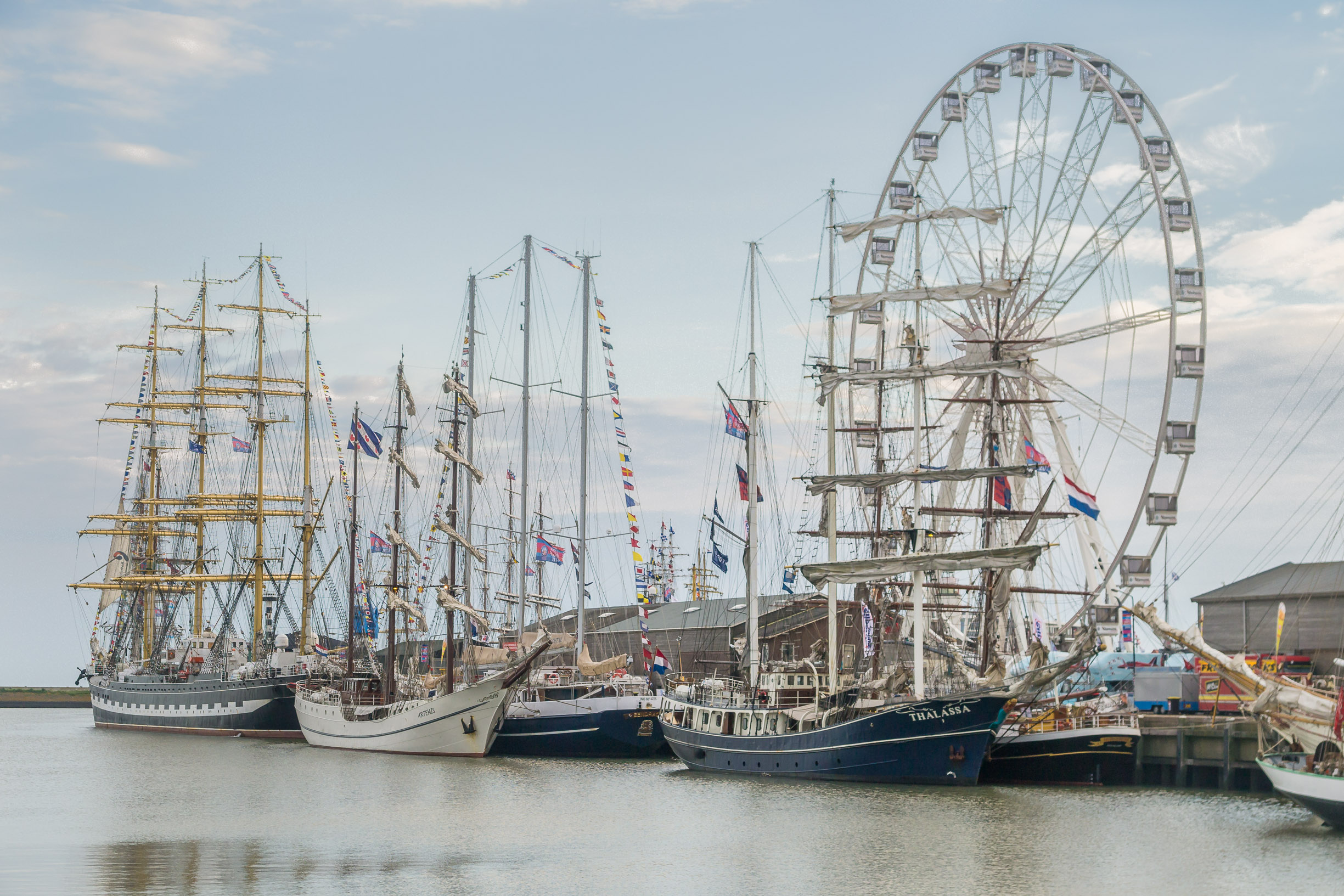
From 3 to 6 July, Harlingen becomes one of the great maritime stages of Europe as the Tall Ships Races 2026 arrive in the Dutch port. The official Harlingen Sail programme describes four days of music, culture, quayside events and some of the largest sailing ships in the world gathered together in one place.
And honestly, the timing could not be better.
Because in the same week that the modern racing world is obsessing over new IMOCA hulls, radical foil geometry and the future of the Vendée Globe, Harlingen is giving us a reminder that sailing is not only about the future.
Sometimes, it is also about remembering where all of this came from.
The Tall Ships Races 2026 began in Aarhus, Denmark, and the fleet then sailed the first race leg toward Harlingen. The first leg was scheduled to finish on the Wadden Sea on 2 July, before the ships entered Harlingen during the Sail In Parade on Friday 3 July.
That is a beautiful image in itself.
A fleet of tall ships crossing the North Sea, arriving not as museum pieces, but as living vessels. Ships with crews aboard. Young people learning. Lines being handled. Sails being set. Watches being stood. Mistakes being made. Skills being passed down.
Because that is the real point of the Tall Ships Races.
Yes, they are spectacular to look at. Yes, they fill harbours with tourists. Yes, they make beautiful photographs and dramatic drone shots. But beneath all of that, they are still about training people at sea.
Sail Training International describes the 2026 series as running from 24 June to 2 August, with three race legs and a Cruise-in-Company. The route takes the fleet from Aarhus to Harlingen, then on to Antwerp, Stavanger and finally Aalborg.
In other words, this is not just a harbour festival.
It is a proper North Sea adventure.
And that matters.
Because modern sailing sometimes becomes very abstract. We talk about data, polar diagrams, foil lift, routing software, autopilots, carbon layups and righting moment. All of that is fascinating, and in the IMOCA class it is absolutely central to the story.
But the Tall Ships Races pull sailing back into something more physical and more human.
You can see the height of the rigs.
You can hear the lines.
You can smell the harbour.
You can watch crews moving together on deck.
You can understand, instantly, that sailing is not only a technical sport. It is a culture. It is a craft. It is a way of teaching people courage, discipline, teamwork and patience.
Harlingen is a perfect stage for that.
It is not a polished artificial marina built only for spectators. It is a real maritime town, with the Wadden Sea outside the door and a long relationship with working water. When tall ships enter a place like that, they do not feel like props. They feel like they belong.
And the fleet itself gives the event real weight.
Among the ships listed for Harlingen are classics such as Statsraad Lehmkuhl from Norway, a 97-metre A-class ship built in 1914; the Dutch Gulden Leeuw, 68 metres and built in 1937; Sørlandet from Norway, 64 metres and built in 1927; and the German Großherzogin Elisabeth, 64 metres and built in 1909.
These are not small boats.
These are ships with presence.
They carry history in their lines. They look like another age, but they are not dead history. They still sail. They still train. They still take people offshore. They still make a young sailor look up at a rig and think: “How on earth do I climb that?”
That feeling is important.
It is the feeling many sailors had before they ever cared about class rules or rating certificates or routing models. The simple wonder of a big sailing ship under canvas.
And maybe that is why the Tall Ships Races still work so well.
They connect sailing to people who might never follow an offshore race tracker. A child standing on the quay in Harlingen may not know what an IMOCA foil is. He may not understand the difference between a scow bow and a central hull bustle. But he understands a forest of masts. He understands flags. He understands crew members waving from the deck. He understands the drama of a ship arriving from sea.
That is how sailing recruits the next generation.
Not always through spreadsheets and performance analysis.
Sometimes through awe.
There is also something wonderfully democratic about these events. The most advanced racing boats in the world can feel distant. They are often hidden behind team bases, sponsor zones, restricted pontoons and technical secrecy. But tall ships are public by nature. They are meant to be seen. They bring the harbour to life. They allow the public to walk close, to ask questions, to meet crews and to feel that sailing is something open.
That does not mean tall ships are simple. In many ways, the seamanship is incredibly demanding. Handling a big traditional rig requires coordination, awareness and trust. A mistake on deck matters. Communication matters. Weather still matters. The sea still has the final word.
But the complexity is visible. You can see it in the rigging. You can see it in the crew. You can see the work.
Modern foiling boats hide much of their complexity inside carbon structures, electronics, software and design files. Tall ships display their complexity openly, like a cathedral made of rope, wood, steel and canvas.
That contrast is exactly what makes this week in sailing so interesting.
In Lorient and other IMOCA centres, the sport is looking forward. Teams are asking how to make offshore monohulls faster, more controllable and less punishing. Designers are pushing the boundaries of what a 60-foot boat can do. The road to the Vendée Globe 2028 is beginning to take shape.
But in Harlingen, sailing is looking backward and forward at the same time.
Backward, because these ships carry the visual language of an older maritime world.
Forward, because the people training on them may become the sailors, engineers, captains, boatbuilders, race organisers and ocean advocates of the future.
That is the secret power of sail training.
It is not nostalgia for nostalgia’s sake.
It is a living bridge.
A young person who learns teamwork on a tall ship may one day step onto a research vessel, a commercial bridge, an offshore racer, a rescue boat or even an IMOCA campaign. The technology may change. The sails may change. The materials may change. But the sea still teaches the same basic lessons.
Pay attention.
Trust your crew.
Respect the weather.
Look after the boat.
Do the work before the problem becomes dangerous.
And never assume the ocean owes you anything.
That is why Harlingen matters this week. The soul of sailing is still people going to sea under sail.
Whether the boat is a 60-foot carbon IMOCA flying on foils in the Southern Ocean, or a 97-metre tall ship entering Harlingen with trainees on deck, the basic magic is the same.
Wind, water, courage and the strange human desire to leave the harbour and find out what happens next.
This week, the IMOCA class is showing us the future.
Harlingen is showing us why the future is worth caring about.
And for sailing, that balance is exactly right.