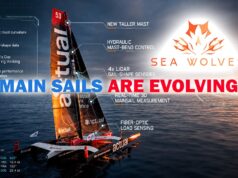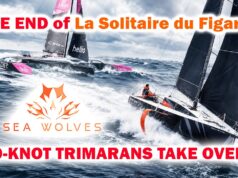


IMOCA foil design is entering a fascinating new phase.
For almost ten years, the direction seemed obvious: larger foils, more lift, more righting moment and more of the boat flying above the water. But the newest generation of IMOCA 60s suggests that the era of simply building the biggest and most powerful foil may now be over.
In this episode of Sea Wolves, we trace the complete evolution of IMOCA foil design—from the first generation introduced before the 2016 Vendée Globe, through the enormous Dalí foils and the violent flying machines of 2020, to the much more sophisticated and integrated designs now being developed for the Vendée Globe 2028.
We look at:
• Why the first IMOCA foils changed offshore racing
• How giant foils created both extraordinary speed and major new problems
• The difference between curved, C-shaped and flatter foil concepts
• Why average speed matters more than maximum speed
• The new foil philosophy behind Malizia 4
• Thomas Ruyant’s latest-generation IMOCA
• The radical upright foiling concept of DMG MORI Global One
• Why IMOCA boats still cannot use T-foils on their rudders
• And what the new foil war could mean for the Vendée Globe 2028
The next generation of IMOCAs is no longer being designed around one perfect high-speed mode. Teams are now trying to create boats that take off earlier, transition faster, sail efficiently across more wind angles and remain stable enough for a solo skipper to keep pushing around the world.
The fastest boat may no longer be the one with the biggest foil.
It may be the boat that can keep flying when everyone else has to slow down.
Subscribe to Sea Wolves for in-depth IMOCA analysis, offshore racing news, yacht design, sailing technology and everything happening on the road to the Vendée Globe 2028.
#IMOCA #VendeeGlobe #Foiling #SailingTechnology #SeaWolves